Thursday, February 17, 2022

Eureka Apprentice Week 4 - Feb 24

 Eureka Apprentice - Week 4- Feb. 24, 2022


Don't forget to study "The Living Christ."  You can come pass it off any time in the next few weeks to any mentor to earn BIG VANGUARD BUCKS!

Study/Learn:

--Brain Work--

What if I told you that you were a genius?

When you think of geniuses, who are the first people that come to mind?

Einstein?

Shakespeare?

Stephen Hawking?

Marie Curie?

What about Mozart or Gandhi?

Most of us tend to equate genius with IQ. Having a high IQ is 1 kind of genius, but there are many others. Read through these 4 types of genius, and see which one makes sense for you. There's a very good chance that your genius is a combination of 2 or more of these

  • Dynamo Genius: Those who express their genius through creativity and ideas. Some who fit this genius are: Shakespeare and Galileo. They both saw things that others couldn't, and used their inventions to bring light to others
  • Blaze Genius: Those whose genius is seen through their interaction with others. Oprah Winfrey is a good example, because she has the ability to connect with the hearts, minds, and souls of a wide range of people. Same with President Nelson! These are master communicators.
  • Temp Genius: Those who are able to see the big picture and stay the course. Nelson Mandela fits here, because he was capable of seeing the wisdom of this vision even in the face of overwhelming odds. Same with Mother Teresa. Tempo geniuses understand the long view in ways the most of those around them cannot.
  • Steel Genius: Those who are brilliant at sweating the small stuff and doing something with the details that others missed or couldn't envision. Sergey Brin used his genius at seeing the potential of large amounts of data to co-found Google. Steel geniuses love getting all the information they can get and have a vision for doing something with that information that most others miss.
As you can see, genius extends far beyond your ability to excel at academics or recite facts. YOU have a GENIUS inside of you. After reading through these, think about what which ones might pertain to you. Write them down in your commonplace book.

'


--Marine Biology--

--Marine Mammals--

In the Bible we read, “And God created great whales, and every living creature that moveth, which the waters brought forth abundantly, after their kind, and every winged fowl after his kind: and God saw that it was good” (Genesis 1:21). 

There are 4 main groups of mammals in the sea.

  • The Pinnipedia [PIN–uh–PEE–dee–uh] suborder includes seals, sea lions, and walruses.

  • The Carnivora [CAR–nih–VOR–uh] order includes sea otters and polar bears. 

  • The Sirenia [sy–REH–nee–ah] order includes manatees and dugongs.

  • The Cetacea [seh–TAY–shuh] order includes dolphins, porpoises, and whales. 

1. Draw out 3 ven diagrams; one for seals and sea lions, one for manatees and dugongs and one for dolphins and porpoises.  Fill them out as you watch the videos about those mammals. If you have never filled out a ven diagram, go to page 103 in the marine biology curriculum and read those instructions.  For the other animals that you are not comparing, write down 3 interesting facts.

2. Watch all of these videos about marine mammals.


If you are sick of video's go to page 105 in the curriculum and read about seahorse.  You do not have to label the body parts, but there are some interesting facts to learn.  Or, you can watch this video about 
Seahorse.  Or, you can do both!  There may be questions from both on the kahoot!
There are literally so many videos about all these animals that are so fascinating.  I tried to choose short ones that told the facts.  Watch more if you want some awesome viewing material.  Here is one that I watched for awhile!  It's all just so awesome!

3. Go to pages 109-112 and print those out.  Do the sorting activity.  Then, you can check your answers from the key on page 113.  Don't look at the answers before you do the activity, it won't be as much fun!  Of course, there will be questions on the kahoot about this activity!
 
4. Go to page 114 and do the activity about Whale and Dolphin movements.
Read pages 116-119.  There are some fun facts about Whale Tails.  You do not have to do another ven diagram like it says on page 119, but you can if you want.  You just need to read the information and take notes.  Because, YES there will be questions on the Kahoot!

5. Send me ONE question with answers to put on the Kahoot. (Please make it related to the information you learned in watching videos and reading in the curriculum.) Please send this by Tuesday Night! 801-901-3610

Remember, there will be kahoot questions from all the Marine Biology assignments. Be prepared!

--Logic--
6. Solve ONE of these puzzles.
You can solve all of them for extra vanbucks.
Cross-Sum
Fill in the grey spaces with the numbers 1-9. You can only use each number once. Do not follow the order of operations.
+X=12
-++
++=21
X--
+-=10
===
738


ARMADA
This one is a battleship puzzle.  The black places indicate pieces of ships.  The Blue indicates water.  The half circle pieces are the ends of the ships, so they indicate that there is a piece connected to it.  The numbers on the side and bottom tell you how many pieces of any given ship are in the row or column.  All other squares are "water."  Pieces of ships cannot touch each other in any way, unless it's part of their own ship.   
1 ship with 4 pieces, 
2 ships with 3 pieces, 
3 ships with 2 pieces and 
4 ships with 1 piece.


Kakuro

This one you have to fill in the blanks with the numbers 1-9, but you can use the numbers more than once.  They have to equal the number on the top or to the left.   You can't use the same number twice in any row or column.  If a row or a column is seperated by black, it is a different row or column. Hint, start with 3's and 4's because they both have to use a 1.  Then go to 16's and 17's because they both have to use a 9.  Then figure out what numbers you need to make the 11.  Once you know that, you can figure out what numbers you need for the 8.  It should be pretty doable from there!  Good Luck!

Sudoku
Only use the numbers 1 to 9 in a game of Sudoku. 
Avoid trying to guess the solution to the Sudoku puzzle. 
Only use each number once  in each row, column and 9 square box. 
Use the process of elimination as a tactic.


--Exploration--


7. Pull your World Exploration Map out and watch these 2 (very amazing)

videos. Document both routes on your map with different color pencils.

Remember to add them to your key.

You'll probably be able chart their courses while you watch, but if not,

you can use the map below.


Ferdinand Magellan

Sir Francis Drake.


How did Magellan and Drake show Resourcefulness?

(Our value for this week)


--Around the World in 80 Days--


8. Week 4: Read through Chapter XXVII, “In which Passepartout attends, at a speed of twenty miles an hour, a course of Mormon history.”


  • Add all travels to your "Around the World" travel log.
  • Chart his journey to your "Around the World" travel map.


Know/Understand: 

1.  Ocean Animal Report:  This week I want you to study one ocean animal that you think is the Most Helpful To prepare for this you will need to do these things.

  • Find an ocean animal to study that is the Most Helpful.
  • Print a picture of your animal and bring it to add to our ocean wall. (No pictures on phones! Physical pictures please!)
  • Learn what ocean it is found in.
  • Tell us what Pelagic Zone or Intertidal Zone it is found in.
  • Tell us what classification of Marine Life it is. (you can find stuff on classification on pages 32-33 in the curriculum, or obviously online.)
  • Convince your fellow vanguardians why your choice is the best. (We will break into groups to do this.)
  • You will get 2 minutes to tell us all about your animal, so keep it short, sweet, and convincing!

2. Where in the World is Napoleon Narwhal
Using a Globe, a map, or a device.  However, if you really want to try without technology, that would be cool!  Anyway, look up these latitude/longitude points.  This week our explorer was found in 2 different bodies of water. Write each location on different sticky notes, just be sure to label each of them with your name:

A: 53.5888° S, 70.7597° W
B: 41.3200 N 70.2100 W


3. Memorization Assignment: This week: meet someone new, and then MEMORIZE their name. And not just for the moment. Commit their name to your memory.

Where might you meet someone, and ask about their name? Think about all the other classes you're involved with, is there someone you don't know? What about your ward? Do you know everyone's name? The more names you memorize this week, the better! There will be vanbucks for extra names.

Have you ever met someone, learned their name, then 2 minutes later you can't remember it? It "goes in one ear, and out the other." I know it happens to me all too often! We're going to learn to memorize names (and lots of other things in class). Here is a way to help you with this assignment. Remember the mnemonic: BE SUAVE:

B is for Believe: Don't go around saying, "I always forget names", etc. Believe you CAN remember names.

E is for Exercise: Doing this takes practice! So the more you use it, the better.

S is for Say it: When you hear a person's name for the first time, say it back. This will both confirm that you heard the name correctly and offer you the opportunity to hear the name twice.

U is for Use it: During the course of your conversation, with this person, use their name. This will help lock it in.

A is for Ask: Ask where a person's name came from. This would be a bit odd if your were asking about a name like "Jim," but it's particularly helpful when meeting someone with a less-common name.

V is for Visualization: Vision is an incredibly powerful memory tool. Try to attach an image to a person's name. For example, if your meet someone named Mary, you can imagine that person wearing a wedding veil on the day she gets married.

E is for End: When you part ways with that person, end your conversation by saying the person's name.

Fun, right? you can do this! When your remember someone's name, and use it when you see them, it makes them feel seen and loved! Knowing names is a powerful tool. Go forth and memorize.


Become/Serve:


Watch this 3 minute video on the travels of Paul. He was a passionate missionary, 
and many books of the New Testament are written by him.  Map all 3 of his missions on your Scripture Journeys Map.  You can do it while you watch, or use the map below.


In one of his journey's to the Philippians, Paul says:


Finally, brethren, whatsoever things are atrue, whatsoever things are bhonest, whatsoever things are cjust, whatsoever things are dpure, whatsoever things are elovelyfwhatsoever things are of good report; if there be any gvirtue, and if there be any praise, hthink on these things.

Those things, which ye have both learned, and areceived, and heard, and seen in me, do: and the God of peace shall be with you.

10 But I rejoiced in the Lord greatly, that now at the last your acare of me hath flourished again; wherein ye were also careful, but ye blacked opportunity.

13 I can do all things through aChrist which bstrengtheneth me.


Based on these verses, what was  Paul's Passion?

In your CPB, write down something you are passionate about.


Eureka Journeyman Week 4 - Feb 24

 Eureka Journeyman Week 4

Whales. Mysterious. Varied. Fascinating. Blubbery. Huge


1. Watch this video about whales.  (5 min) It's awesome because you can hear the humpback whales talking under the water.  This is only the humpbacks.  There are dozens of whale species!

2 Choose a type of whale to print out or draw, and bring for the ocean.  Have it cut out, labeled, and ready to put in the ocean. This document has a good selection to choose from, but don't be limited by these.  If you wish to find a different one, go for it.  Also, look up the sound your chosen whale makes, and come to class ready to share the sound. :)

3. Choose a specific type of whale (could be the same as above, or different), and choose one of the following projects.  Take your time.   We don't want a rushed project, but one that takes thought and precision.  While only 1 is required for class, there will be extra vanbucks for each extra project you bring. (Impress me for big bucks)

A.  Look up a type of whale, and draw it's skeleton.  Make sure it fills an 8X11 size paper (don't make it small).  You can do this free-hand, or you can print one out and trace it.  Either way, the finished project should be "drawn" by YOUR hand.  Bring a couple interesting facts to share about your type of  whale.

B. Write a poem about a specific type of whale.  Minimum 6 lines.  It can be funny, serious, creative, whatever, but make sure it includes facts about the whale.


C. Write a poem, or some facts about a whale, in the SHAPE of a whale.


So...to enter journeyman, you'll have (at least) 2 papers in hand. 
1. A whale ready for the ocean
2. A skeleton or poem to show everyone and hang on the hooks

And a whale sound.

Have a whale of a day!


Eureka Masters week 4

Eureka Masters Class Week 4


1. Read this book!
(Or Watch the movie!)

2. Come to class ready to discuss how this book uses our theme of Resourcefulness.

3. Come with 2 other prepared discussion points.

4. Send a sticker idea by Wednesday at 5:00 to Sister Eagar at tasha.eagar@gmail.com or 801-901-3610

5. Do something/anything that represents Pi or his travels and bring it to class to share.  Do something different than you did last week.  Some ideas....
  • Draw a picture
  • Paint a picture
  • Make a treat
  • Make a stop motion video
  • Make a food
  • Make a sculpture
  • Make up a song
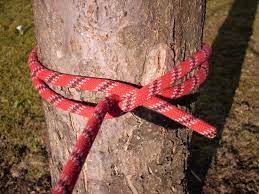
6. See if you can figure out what kind of knot we will be learning based on this picture.  (Is it a knot?) (Ask your dad!)


Friday, February 11, 2022

Eureka Journeyman Week 3 - Feb 17

 Eureka Journeyman Week 3 - Feb 17

I know I said we'd do whales this week, but those are actually for next week! Then Sharks!

Study/Learn

The word "echinoderm" is made up from Greek ἐχινόδερμα, "spiny skin"

And we're going to have some to observe in Journeyman!


   1. Take a few minutes to look over the classes of the this Echinoderm phylum tree.


Mollusca, meaning “soft-bodied,” is one of the largest phylums in the animal kingdom. The word mollusc (or mollusk) derives from the Latin word “mollis,” which means “soft.” There are an estimated 200,000 species of mollusk worldwide accounting for nearly a quarter of all marine life.

2. Take a few minutes to look over the classes of the this Mollusk phylum tree.


I have a funny question. What if an entire species of animal was wiped out?  

Not there anymore. 

Gone.  

Would it change the ecosystem of the ocean?  What about the ecosystem on land?

So, what do these animals really do?  Why are they important?

Consider these questions for this assignment.


3. Go to this google doc, and add 5 facts.  Each cell can have up to 5 facts. Some cells might remain blank. You can add your facts to the same cell, or multiple cells. No repetition within the same cell. Let's all work together and see what these animals really do for our world.

Before class, I'll print out the doc, and we'll use it for a game during journeyman.


4. In order to be ready for dissections in journeyman watch these videos. I know that some of you get a little squeamish, and I respect that.  Give these vids a try, and if a part gets a little gross, just skip over it.  Do the best you can.  I think being a little more familiar with the animals before class will help the dissections to be more worth while.  

Observing and dissecting these animals is fascinating to me, because it reminds me that even such seemingly simple animals were created with mind-blowing complexity.  Another testimony of a Mighty Creator!  I hope you're finding value in this as well.

If you plan to do a lot of the dissecting (you know who you are), you should watch all of these! 

In your CPB, sketch each of the 4 animals from the videos. From your sketches, label the features on each animal you'd really like to find.

Sea Urchins

Urchins and Sand Dollars Part 2

Sea Stars

Clams

Thursday, February 10, 2022

Eureka Masters Week 3

 Eureka Masters Class Week 3


1. Read this book!

2. Come to class ready to discuss how this book uses our theme of PASSION.

3. Come with 2 other prepared discussion points.

4. Send a sticker idea to Sister Eagar at tasha.eagar@gmail.com or 801-901-3610

5. Do something/anything that represents Moby Dick and bring it to class to share.  Some ideas....
  • Draw a picture
  • Paint a picture
  • Make a treat
  • Make a stop motion video
  • Make a food
  • Make a sculpture
6. See if you can figure out what kind of knot we will be learning based on these pictures.  (Is it a knot?)